Monte Santa Trega
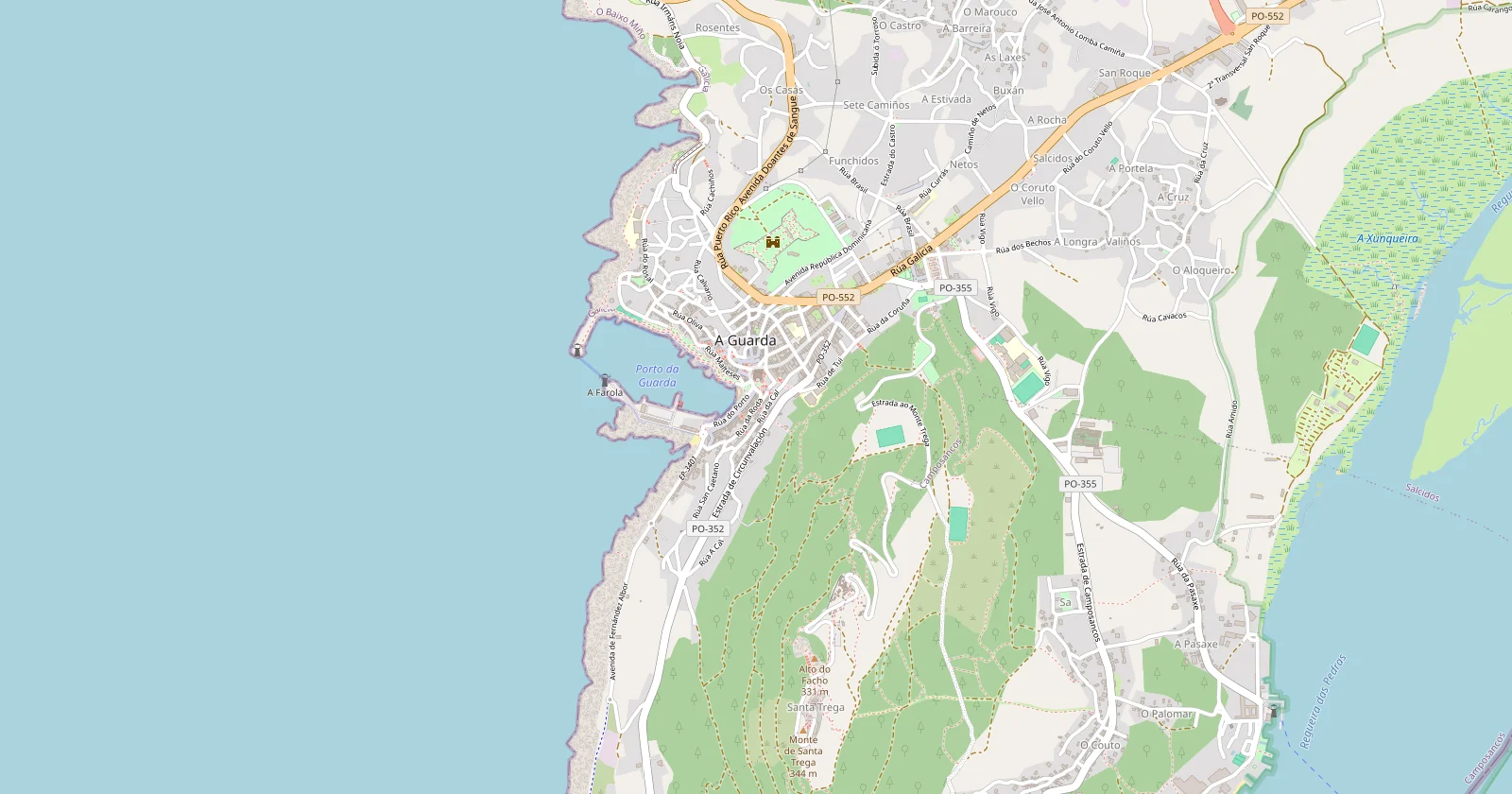
The hill above the town rises to 341 m at the San Francisco peak, a natural viewpoint over the mouth of the Miño, Portugal, the O Rosal valley and the ocean.
At the top are the Santa Trega hillfort, one of the best-known Galician-Roman settlements in Galicia and a National Historic-Artistic Monument since 1931, and the Archaeological Museum (MASAT). The Santa Trega pilgrimage takes place on 23 September.
The harbour and fishing tradition
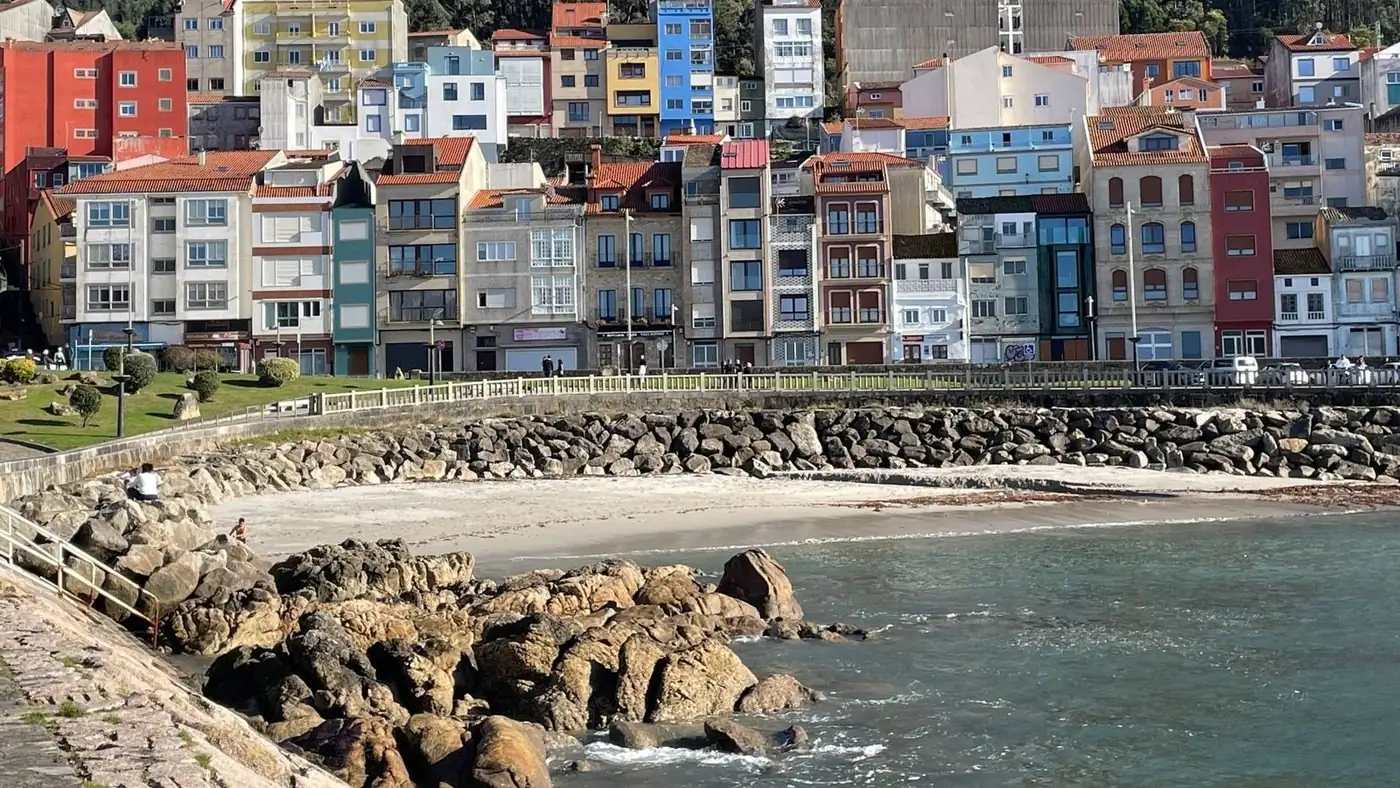
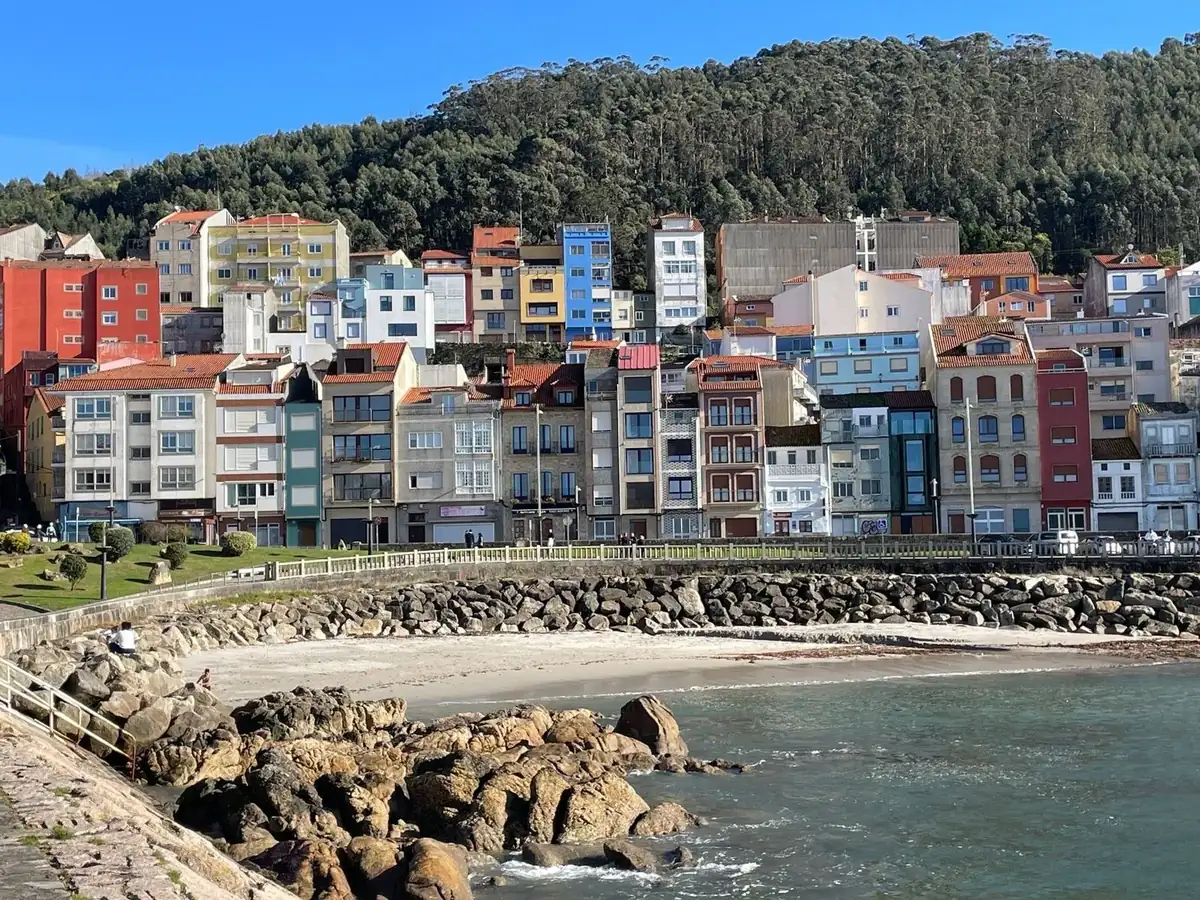
A Guarda keeps a working fishing port and a quarter of narrow, colourful fishermen’s houses facing the sea. The harbour promenade, Praza do Reló and Santa María church are the heart of daily life.
Beaches
Ribeira beach is right in the harbour. The municipality also has sea and river beaches: Area Grande, on the Atlantic, and O Muíño, at the mouth of the Miño, have received the Blue Flag in recent years. In the 2024 health rating, O Muíño, A Lamiña, A Armona, O Carreiro and Area Grande were rated “excellent” for bathing water.
The Portuguese Coastal Camino
The coastal route of the Portuguese Camino enters Galicia at A Guarda (A Pasaxe) after crossing the Miño from Caminha. The official A Guarda–Oia stage is 16.7 km along the coast, and the route continues to Baiona, Vigo and Redondela, where it joins the central Portuguese Way.
Portugal across the river
The traditional A Guarda–Caminha car ferry has not run since October 2021. To cross on foot or by bike there are small passenger boats between Camposancos and Caminha, with timetables that depend on tide and weather and are reduced in winter.
By car, the nearest bridge is Goián–Vila Nova de Cerveira (Friendship Bridge), about 25 minutes away; there is also the Tui–Valença international bridge.
Everyday services
- Health centre open 8:00–22:00, with out-of-hours care outside those times.
- State nursery and primary schools, the IES A Sangriña secondary school and state-funded private schools.
- A municipal fresh-food market, Monday to Saturday mornings, plus shops, bars and restaurants in town.
Distances
- Vigo-Peinador airport: about 50 km by road.
- Porto airport (Francisco Sá Carneiro): a little over 100 km.
- Santiago airport: about 150 km.
- Vigo railway station: about 60 km; Guillarei (Tui) station: about 35 km.
- Vigo is reached inland via Tui (A-55) or along the coast through Oia and Baiona (PO-552), with a cycle lane between Baiona and A Guarda. Regular buses run between A Guarda and Vigo on both routes.
Climate
Mild oceanic climate: average highs are around 12–13 °C in winter and 24 °C in July and August. Most rain falls from October to March; summer is drier and sunnier. Approximate figures based on climate averages.
Food and festivals
Lobster and seafood cooking are the town’s signature. The Lobster and Seafood Festival (Festa da Langosta e da Cociña Mariñeira), a Festival of Tourist Interest of Galicia, has been held in the harbour on the first weekend of July since 1991. In August come the Festas do Monte, also of tourist interest.
Living here all year
Outside summer, A Guarda is a quiet town with a life of its own: market, schools, health centre, a working port and Portugal and Vigo close by. Winters are rainy and mild; summer brings more visitors, festivals and a lively harbour.
Can you picture yourself living on the harbour? Discover the fisherman’s house for sale on the seafront by Ribeira beach.
See the house for saleSources: Turismo A Guarda, Concello da Guarda, Sergas, Xunta de Galicia (Camino de Santiago, Museos de Galicia), Turismo Rías Baixas.